Also called purple coneflower, coneflower, American coneflower, eastern purple coneflower, narrow-leaf purple coneflower, black-samson, pale purple coneflower
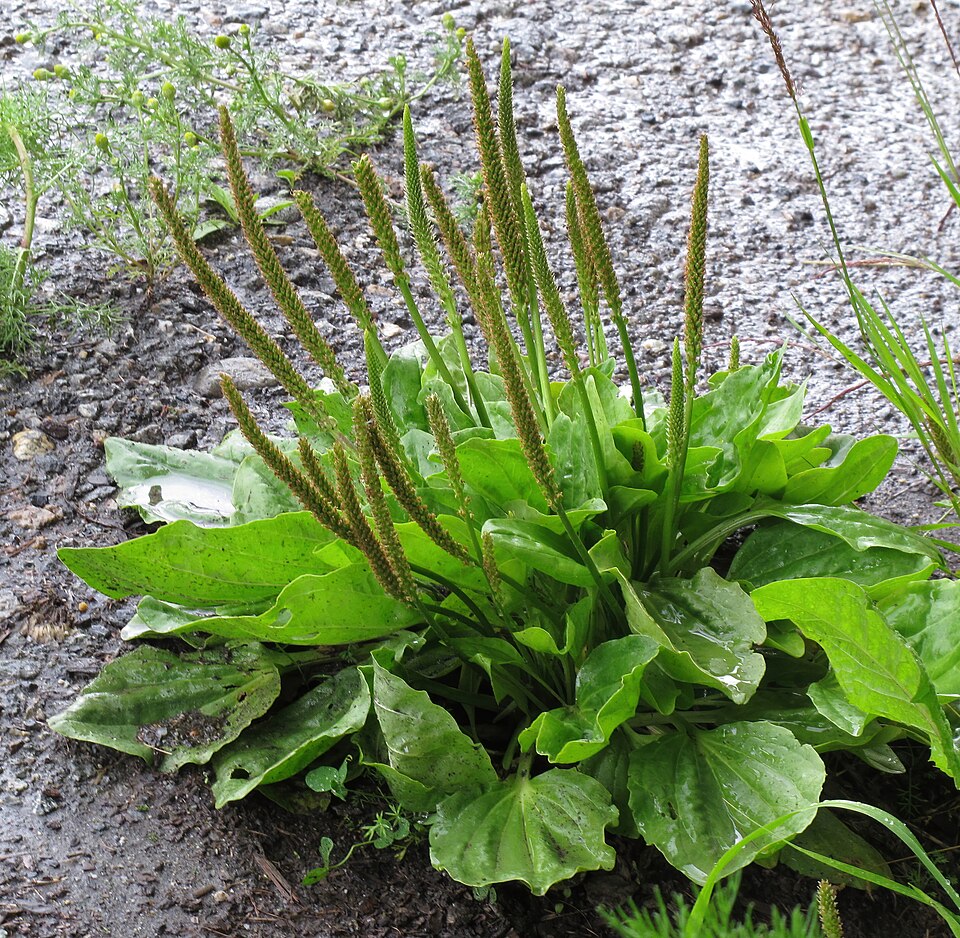
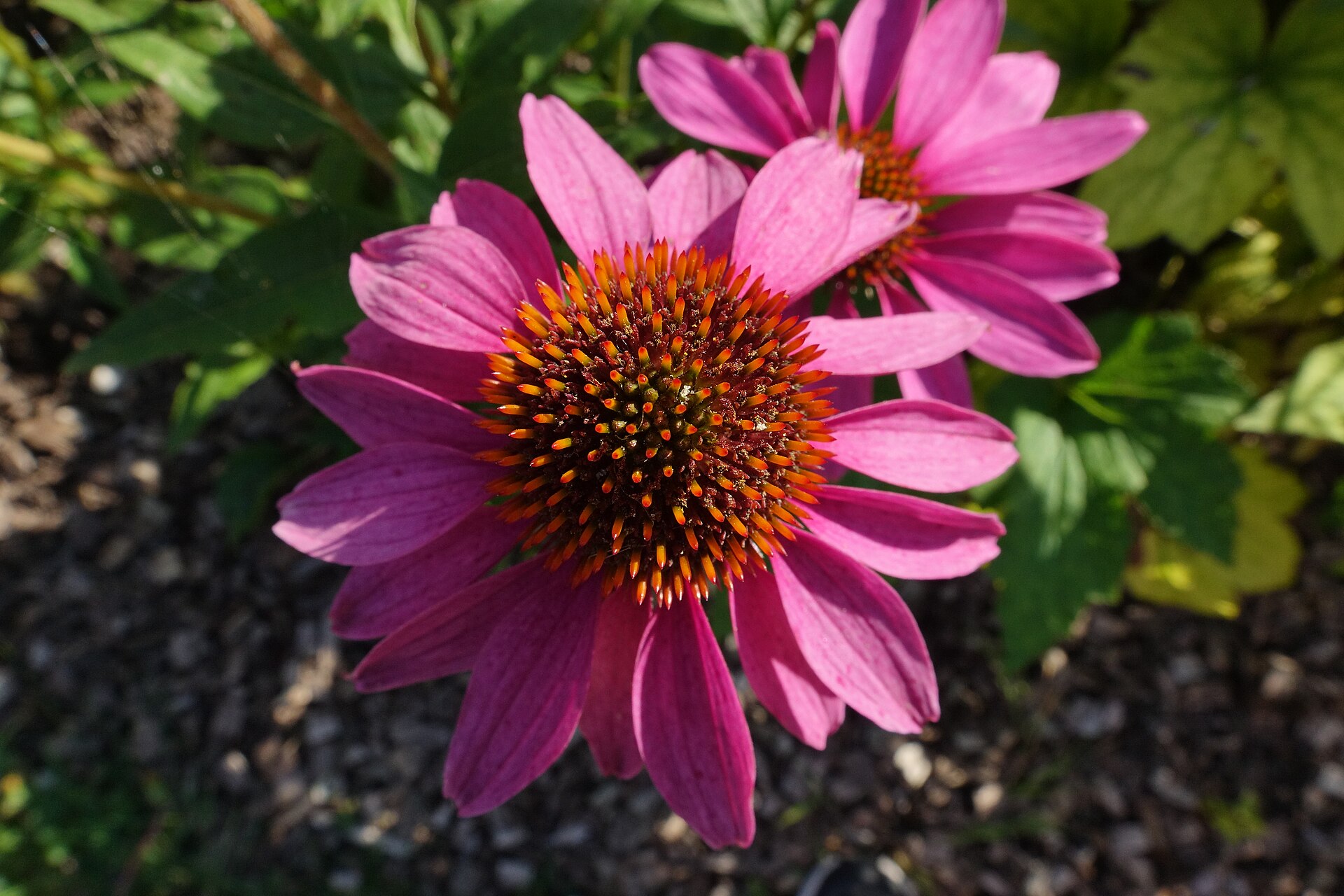
Echinacea is one of the few popular medicinal herbs that is native to North America. Wild species grow east of the Rocky Mountains in the United States [1], and E. angustifolia reaches into central Canada [3]. Purple coneflower (E. purpurea) is also a popular, tough garden perennial with pinkish-purple, daisy-like flowers around a spiny brown cone [2].
Today echinacea is sold mainly to prevent or treat the common cold. The evidence is modest at best. NCCIH says taking echinacea "may slightly reduce your chances of catching a cold," and it's still unclear whether it shortens a cold [1]. Large reviews find, at most, a small preventive effect that may not matter much in practice [8][9].
purple coneflower, coneflower, American coneflower, eastern purple coneflower, narrow-leaf purple coneflower, black-samson, pale purple coneflower
❦
Names
Common names: echinacea, purple coneflower, coneflower, American coneflower [1]. Each species also has its own names: eastern purple coneflower (E. purpurea), narrow-leaf purple coneflower or black-samson (E. angustifolia), and pale purple coneflower (E. pallida) [2][3][4].
Botanical names: three species are used as medicine: Echinacea purpurea (L.) Moench, Echinacea angustifolia DC., and Echinacea pallida (Nutt.) Nutt. [1][5][6][7]. Products differ a lot depending on the species, the plant part (root or above-ground parts), and how they are made [8].
Family: Asteraceae, the daisy family. Echinacea is closely related to sunflowers, daisies, and ragweed [1].
Where the name comes from:Echinacea comes from the Greek echinos, "sea urchin" or "hedgehog," after the spiny cone in the center of the flower [3][4].
❦
Traditional uses
This section describes how people have used echinacea historically. It does not show that these uses work. See the next section for the evidence.
Native American medicine: echinacea species were among the most widely used and important medicinal plants of Indigenous peoples of the Great Plains, and they are still harvested and used traditionally in many tribal communities [11]. Native Americans used E. purpurea for respiratory infections, tooth pain, and snakebite [1].
Northern Cheyenne uses: the Northern Cheyenne have used E. angustifolia (and E. pallida) for colds, toothache, and cavities. Chewing the root makes saliva flow and helps stave off thirst during the Sun Dance. Root tea has been used for sore throat or mouth and for arthritis, and tea applied to the skin has been used to cool fevers [12].
Settler and early American medicine: Lewis and Clark sent echinacea roots and seeds to President Jefferson in 1805 [11]. By around 1900, doctors widely used E. angustifolia. It was the most-prescribed medicine made from an American plant through the 1920s, until sulfa drugs and antibiotics arrived [11]. Early settlers used the root for almost any kind of sickness, and also to help cows and horses that weren't eating well [2].
European traditional uses: EU regulators list traditional uses for colds (the roots of all three species), small superficial wounds (fresh E. purpurea herb, on the skin), and spots and pimples from mild acne (E. purpurea root) [6][7][13][14].
❦
What the evidence says
Bottom line: the evidence is mixed. At best there's a small effect on preventing colds, and no clear effect on how long a cold lasts. Many trials have been done, but they tested very different products, which makes them hard to compare [8][9].
Use
What was found
Strength
Preventing colds
A 2014 Cochrane review of 24 trials (4,631 people) found that none of the individual prevention trials showed a significant effect. Pooling them suggested a 10–20% lower risk, "of questionable clinical relevance" [8]. A 2019 review found about 22% lower risk but called the clinical meaning "debatable" [9]. NCCIH: it "may slightly reduce your chances of catching a cold" [1].
Weak to moderate. A small effect is possible.
Treating colds (shorter or milder)
In the Cochrane review, only 1 of 7 treatment trials found that colds were shorter [8]. A 2019 review found no effect on duration [9]. A U.S. trial of 719 people found a small difference (about half a day) that was not statistically significant [15].
Weak. No reliable benefit shown.
European approval
EU regulators accept the expressed juice of fresh E. purpurea herb as "well-established use" for short-term prevention and early treatment of colds, based on clinical trials in adults [5][13]. Other echinacea products have only traditional approval [6][7][14].
Regulators judge the evidence differently. Cochrane reviewers were more cautious [8].
Colds in children
A U.S. trial of 407 children aged 2–11 (707 colds) found E. purpurea did not shorten or ease colds. Rash was more common with echinacea (7.1% vs 2.7%) [16]. NCCIH says there isn't enough evidence for children [1].
One good trial: no benefit.
Cough from colds
A 2015 review found "limited evidence" for echinacea for cough [17].
Weak.
Wounds, eczema, other uses
EU regulators noted only animal data for wound healing [13]. NCCIH says it's unclear whether echinacea helps eczema or other conditions [1].
Unproven.
What we can't say: there is no good evidence that echinacea cures colds or flu, treats infections in place of medical care, or "boosts" your immune system in a way that prevents serious illness. NCCIH-sponsored research also suggests that how active an extract is can depend on soil conditions where the plant grew, which is one more reason products vary [1].
❦
How it’s used / prepared
This is general, traditional information, not a recommendation or a dose for you. Talk with a health professional before using echinacea for a health purpose.
Parts used: the roots of all three species, and the fresh above-ground parts (herb) of E. purpurea[6][7][13][14].
Pressed juice: the EU monograph covers the expressed juice of fresh E. purpurea herb, taken by mouth by people 12 and older. For colds it is started at the first signs and used for no more than 10 days [5].
Extracts and tinctures: root products are usually dry or liquid extracts made with alcohol or water, taken as tablets or liquids or held in the mouth [6][14]. Products containing alcohol must be labeled [5].
On the skin: the EU traditional-use monograph describes an ointment made with E. purpurea juice for small superficial wounds, for no more than 1 week [5].
Buying tips: a U.S. study of 59 store-bought echinacea products found that 6 (10%) contained no measurable echinacea, and many didn't match the species on the label. A "standardized" claim didn't guarantee accurate labeling [18]. Choose products that name the species and plant part.
When to stop and get help: in the EU guidance, see a doctor if cold symptoms last more than 10 days, get worse, or come with a high fever, or if a wound shows signs of infection [5][6].
❦
How to identify
Echinacea is easy to grow and easy to buy. Because wild echinacea is under harvest pressure (see the note below), Verdant Almanac recommends growing it or buying cultivated products rather than digging wild plants.
Flowers: single daisy-like heads on stiff stems, with a domed, spiny, purplish-brown to orange-brown center cone and pink to purple (sometimes white) petals that often droop [2][3][4].
E. purpurea: broad, oval to lance-shaped, coarsely toothed leaves 3–8 inches long [2].
E. angustifolia and E. pallida: narrower, hairy leaves, mostly on the lower third of the stem [3][4].
Stems:E. purpurea stems are light green with small purple streaks and scattered white hairs [2]. E. angustifolia and E. pallida have hairy stems [3][4].
Height:E. purpurea is about 3–4 feet [2], E. pallida about 2–3 feet [4], and E. angustifolia about 1–2 feet [3].
Habitat:E. angustifolia grows in dry prairies and barrens [3]. E. pallida grows in rocky prairies, open woods, glades, and roadsides [4]. E. purpurea is widely planted in gardens and meadows [2].
Season:E. purpurea flowers about June to August [2]. E. pallida blooms 2–3 weeks earlier, early June to late July [4].
Range:E. purpurea is native to the central and eastern U.S. [2]. E. pallida is native from Wisconsin and Michigan south to Texas and Louisiana, and in Ontario [4]. E. angustifolia grows in central Canada and the central U.S. [3].
Conservation note: United Plant Savers lists Echinacea species as "At-Risk" and recommends cultivated sources whenever possible [19]. E. angustifolia and E. pallida are the two species harvested heavily from the wild [11]. Researchers at the University of Kansas found that habitat loss (prairie converted to cropland, herbicides, overgrazing, and development) is an even bigger threat than harvesting [11].
❦
Look-alikes to avoid
When in doubt, don't.
If any feature doesn't match, or you can't check all of them, leave the plant alone.
We did not find reliable sources describing a dangerous look-alike for echinacea. The main identification problem is telling the echinacea species apart, which matters because products and regulatory approvals differ by species [5][6][7]. Purple and pale purple coneflower are hard to tell apart. Pale purple coneflower has white pollen, longer and narrower leaves, and blooms earlier [4].
❦
Safety and interactions
Allergies, sometimes severe: don't use echinacea if you are allergic to it or other daisy-family plants [5][13]. Rashes, hives, and facial swelling can occur. Rarely, severe reactions such as anaphylaxis, asthma attacks, and Stevens-Johnson syndrome have been reported [1][5]. People with allergies, asthma, or eczema (atopy) face higher risk and should talk with a doctor first [5]. In Australian reports, more than half of people with possible allergic reactions were atopic, and some reacted to their very first dose [21].
Digestive upset: the most common side effects are stomach pain and nausea [1].
Autoimmune and immune conditions: EU regulators do not recommend echinacea for people with autoimmune diseases, immune deficiency, conditions that affect white blood cells, or who take immunosuppressant drugs. They say a link with autoimmune disease "cannot be excluded" [5]. NCCIH notes a theoretical interaction with immunosuppressants [1].
Medication interactions: NCCIH says the evidence is conflicting on whether echinacea affects how the liver processes some drugs [1]. In a study of 12 healthy volunteers, E. purpurea root changed how the body handled midazolam (a CYP3A drug) and slowed the clearance of caffeine [10]. LactMed also notes possible effects on liver (P450) enzymes [22]. If you take prescription medicine, ask your pharmacist first.
Caffeine: NCCIH lists a theoretical interaction with caffeine [1], consistent with the slower caffeine clearance seen in the study above [10].
Pregnancy: some studies suggest certain E. purpurea and E. angustifolia extracts are possibly safe for up to 7 days in the first trimester, but talk with your provider first [1]. EU regulators say limited data (several hundred pregnancies) show no harm, but don't recommend use in pregnancy unless a doctor advises it [5].
Breastfeeding: little is known [1]. LactMed reports that some echinacea compounds passed into breast milk in one mother. There is no data on safety for nursing infants, and sources disagree on whether to avoid it [22]. Echinacea products should not be applied to the breast while breastfeeding [5].
Children: NCCIH says E. purpurea extract is possibly safe short term, but some children in a trial developed rashes, and allergic reactions could be severe [1][16]. EU regulators do not recommend use under age 12 [5].
How long to use: the EU monograph for E. purpurea juice limits use to 10 days for colds and 1 week on the skin [5].
Pets: we did not find an ASPCA entry for echinacea. NC State Extension notes no known toxic effects of pale purple coneflower for pets, livestock, or people [4].
Not medical advice
This page is for general education only. It is not medical advice and doesn't replace a doctor, pharmacist, or other qualified professional. Herbs can cause allergic reactions and interact with medicines. Check with a health professional before using any herb, especially if you are pregnant or breastfeeding, giving it to a child, taking medication, or managing a health condition. Never eat or use a wild plant unless an expert has confirmed what it is. For a suspected poisoning in the U.S., call Poison Help at 1-800-222-1222 [20]. In Canada, call 1-844-POISON-X (1-844-764-7669), or the Centre antipoison du Québec at 1-800-463-5060 if you are in Québec [23].
Karsch-Völk M, Barrett B, Kiefer D, et al. Echinacea for preventing and treating the common cold. Cochrane Database Syst Rev. 2014. https://pubmed.ncbi.nlm.nih.gov/24554461/
David S, Cunningham R. Echinacea for the prevention and treatment of upper respiratory tract infections: a systematic review and meta-analysis. Complement Ther Med. 2019. https://pubmed.ncbi.nlm.nih.gov/31126553/
Gorski JC, Huang SM, Pinto A, et al. The effect of echinacea (Echinacea purpurea root) on cytochrome P450 activity in vivo. Clin Pharmacol Ther. 2004. https://pubmed.ncbi.nlm.nih.gov/14749695/
Taylor JA, Weber W, Standish L, et al. Efficacy and safety of echinacea in treating upper respiratory tract infections in children: a randomized controlled trial. JAMA. 2003. https://pubmed.ncbi.nlm.nih.gov/14657066/
Wagner L, Cramer H, Klose P, et al. Herbal medicine for cough: a systematic review and meta-analysis. Forsch Komplementmed. 2015. https://pubmed.ncbi.nlm.nih.gov/26840418/
Mullins RJ, Heddle R. Adverse reactions associated with echinacea: the Australian experience. Ann Allergy Asthma Immunol. 2002. https://pubmed.ncbi.nlm.nih.gov/11814277/
German chamomile is a small, sweet-smelling annual with feathery leaves and little daisy-like flowers that have white petals and a domed yellow center.